
Food for Thought
August 13, 2026
Key Reentry Statistics & Trends
1. Recidivism Trends
20% Long-Term Drop: National re-incarceration rates over the past decade dropped roughly 20% (falling from ~35% down to ~28%).
Early Re-offense: Studies on community supervision initiatives show first-year re-offense rates hover around 13.7% for active program participants, illustrating the vital role early support plays during the initial transition period.
2. Employment & Fair Hiring Wins
Automated Record Sealing: State level "Clean Slate" initiatives (such as those in PA, UT, and MI) showed that 42% of individuals whose records were automatically sealed reported direct improvements in work opportunities, personal finances, or reduced reliance on public assistance.
Pre-Release Identification Access: Access to IDs remains a primary hurdle to immediate job placement. Targeted state initiatives made strides here—for instance, New York issued non-driver IDs to over 950 incarcerated individuals prior to release, with 95% receiving or requesting vital documents like birth certificates before reentering the workforce.
3. Healthcare & Essential Needs
Medicaid Enrollment: Seamless health coverage from day one isl. States leveraging pre-release Medicaid enrollment saw marked success; New York successfully enrolled 77% of eligible returning citizens into Medicaid prior to release.
Behavioral Health Needs: Data shows that up to 96% of individuals returning home have a history of substance use challenges, and 34% face moderate-to-severe mental health conditions, underscoring why integrated healthcare is a core indicator of successful reentry.
s,dd/July 24, 2026
What’s New in Prison Reform.
Key Reentry Statistics & Trends
1. Recidivism Trends
20% Long-Term Drop: National re-incarceration rates over the past decade dropped roughly 20% (falling from ~35% down to ~28%).
Early Re-offense: Studies on community supervision initiatives show first-year re-offense rates hover around 13.7% for active program participants, illustrating the vital role early support plays during the initial transition period.
2. Employment & Fair Hiring Wins
Automated Record Sealing: State level "Clean Slate" initiatives (such as those in PA, UT, and MI) showed that 42% of individuals whose records were automatically sealed reported direct improvements in work opportunities, personal finances, or reduced reliance on public assistance.
Pre-Release Identification Access: Access to IDs remains a primary hurdle to immediate job placement. Targeted state initiatives made strides here—for instance, New York issued non-driver IDs to over 950 incarcerated individuals prior to release, with 95% receiving or requesting vital documents like birth certificates before reentering the workforce.
3. Healthcare & Essential Needs
Medicaid Enrollment: Seamless health coverage from day one is critical. States leveraging pre-release Medicaid enrollment saw marked success; New York successfully enrolled 77% of eligible returning citizens into Medicaid prior to release.
Behavioral Health Needs: Data shows that up to 96% of individuals returning home have a history of substance use challenges, and 34% face moderate-to-severe mental health conditions, underscoring why integrated healthcare is a core indicator of successful reentry.
Driven by curiosity and built on purpose, this is where bold thinking meets thoughtful execution. Let’s create something meaningful together.
One Life at a time equals
Real Impact!
July 6


In connection with Hope-Western Prison Education Program our organization PRIP is proud to welcome home returning citizen Mike Dinoffria
May 21, 2026
Testified at the Michigan Legislature along with Hope College President Matthew Scogin and Michigan Consortium on Higher Education Dir. Rich Ray advocating for funding for prisoners and those who are underprivileged to have access to college.



May 16, 2026
So Proud of the PRIP team showing up to support our First Responders and Military at Holland’s Walk for Warriors.


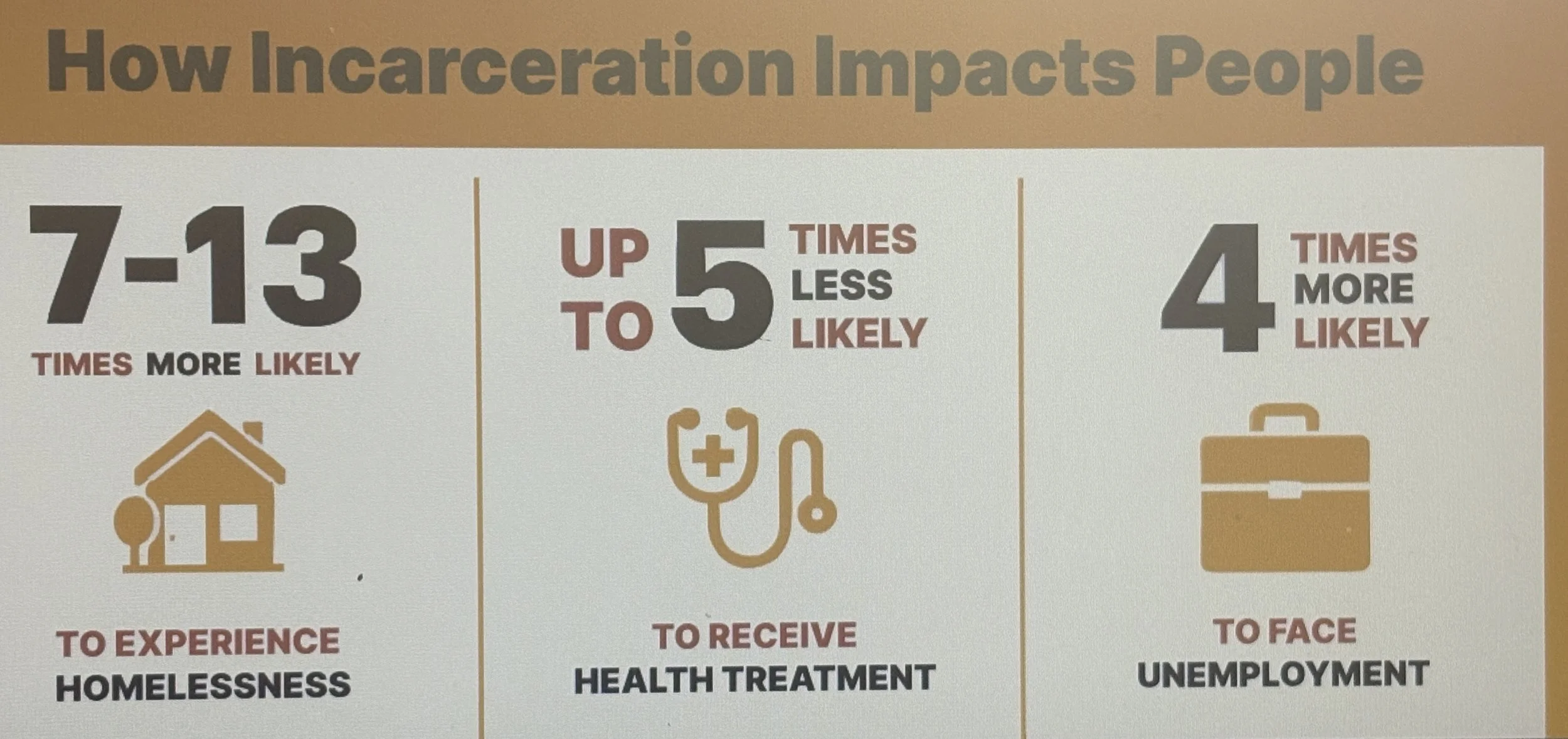
The Data Reveals The Truth
Why we all should be concerned with reentry and our prison systems.
4/9/2026
04-01-2026
A new Way of Doing Criminal Justice
The Norwegian criminal justice system is a rehabilitation-focused, humanitarian model that eschews capital punishment and life imprisonment, focusing on "social defense" and reintegration. With a maximum standard sentence of 21-30 years, it utilizes a "normality principle" to mirror prison life with outside life, resulting in a low recidivism rate of roughly 20-34%.
Core Principles and Features
Rehabilitation over Retribution: The primary goal is to prepare individuals for reintegration into society, creating "better neighbors" rather than merely punishing them.
The Normality Principle: Sentenced individuals retain all rights, with only liberty restricted. Life inside prison resembles life outside as much as possible.
Dynamic Security: Prison officers focus on building relationships with inmates rather than relying solely on surveillance, aiding in support and rehabilitation.
The Import Model: External community services (education, healthcare, libraries) are responsible for providing services inside prisons to ensure continuity.
Sentencing and Corrections
No Life Sentences: The maximum custodial sentence is generally 21 years (or 30 years for specific heinous crimes), though this can be extended in 5-year increments if deemed necessary.
Low Incarceration Rate: Norway has one of the smallest prison populations in the world, with only 54 people per 100,000 in prison.
Focus on Reentry: Prisons prioritize work, education, and therapy to prepare inmates for life after release.
Low Recidivism: While some argue it is too lenient for serious crimes, the system produces one of the lowest recidivism rates global
Structure
Prosecuting Authority: Organized into three levels: The Director of Public Prosecutions (Riksadvokaten), Regional Public Prosecution Offices (Statsadvokaten), and the police.
Correctional Service: Focused on preparing offenders to live independently upon release.
How Norwegian prisons prepare inmates to become better neighbors
Norway's official policy is to produce a person who, “when the sentence has been served, is drug-free or in control of his drug us...
Medium
Incarceration in Norway
Norway does not impose capital punishment or ordinary life imprisonment. The maximum custodial sentence is 21 years.
Rehabilitation Lessons from Norway's Prison System - First Step Alliance
The approach has clearly paid dividends, as Norway has the lowest recidivism rate and one of the lowest crime rates in the world. ...
First Step Alliance.