
Reach one teach one…
-Maya Angelou
Here at Project Restoration in Progress we are proud to announce our partnership with Mediation Services! We are now able to provide restorative circles and Mediation sessions for those recently released and struggling with their transitions back into society.
-
We're a team of passionate thinkers and doers, dedicated to assisting the needs of those reentering society. Collaboration and curiosity drive everything we do.
-
We believe in keeping things simple, smart, and human. The greatest kindness we can show begins with being able to listen.
-
From startups to seasoned brands, we partner with people who care about doing things right—and doing them well like Mediation Services!

April 20, 2026
Just in case you didn’t know!
Project Restoration In Progress (PRIP)
1. Executive Summary
Project Restoration In Progress (PRIP) is a nonprofit organization dedicated to reducing and preempting crime through education, mentorship, and healing-centered programs for incarcerated individuals and their families. By addressing trauma, strengthening family connections, and equipping participants with life skills, PRIP seeks to break generational cycles of incarceration and foster safer, more connected communities.
PRIP operates with a core belief in the inherent humanity of all people and advocates for both incarcerated individuals and correctional officers to reduce violence and promote safety within prison systems.
As a startup nonprofit, PRIP will focus its initial efforts on three strategic program areas that offer measurable impact, scalability, and strong appeal to donors, grantors, and institutional partners.
2. Organizational Overview
Name: Project Restoration In Progress (PRIP)
Legal Status: 501(c)(3) (pending )
Stage: Startup / Pilot Phase
Target Population:
Incarcerated individuals
Families of incarcerated individuals
Correctional institutions and surrounding communities
3. Problem Statement
Incarceration destabilizes families, increases community risk, and perpetuates generational cycles of crime. Children with incarcerated parents face significantly higher risks of incarceration themselves, while prisons struggle with violence, trauma, and limited rehabilitative resources.
Most systems address punishment rather than the root causes of criminal behavior—such as unresolved trauma, lack of education, and broken family bonds. Without intervention, communities continue to absorb the long-term social and economic costs.
4. PRIP’s Solution
PRIP addresses these challenges through education, healing, and mentorship, restoring dignity and empowering individuals to become positive contributors to their families and communities.
5. Three Strategic Focus Areas
Focus Area 1: Education & Healing Programs (Core Offering)
Goal: Reduce recidivism by addressing trauma and building life skills.
Key Activities:
Healing Circles facilitated in group settings
Formational education focused on self-awareness, accountability, and emotional intelligence
Trauma-informed programming to uncover root causes of criminal behavior
Why This Matters:
Education is the foundation of empowerment
Healing reduces violence and improves institutional safety
Group-based learning builds community and accountability
Year 1 Outcome Targets:
Pilot program in 1–2 correctional facilities
50–100 incarcerated participants
Pre/post assessments measuring behavioral awareness and conflict reduction
Focus Area 2: Family & CommunityReconnection
Goal: Strengthen families to prevent generational incarceration.
Key Activities:
Parenting education and role preparation for incarcerated parents
Support resources for families impacted by incarceration
Communication and relationship-building tools
Why This Matters:
Family stability directly impacts crime prevention
Children with engaged parents are less likely to reoffend later in life
Strong families create stronger neighborhoods
Year 1 Outcome Targets:
Family engagement component added to all education programs
Partnerships with local family-support organizations
Documented improvements in family contact and engagement
Focus Area 3: Mentorship, Advocacy & Safer Institutions
Goal: Reduce violence and improve safety within prison systems.
Key Activities:
Mentorship programs pairing participants with trained mentors
Advocacy for both incarcerated individuals and correctional officers
Programs promoting mutual respect, communication, and conflict reduction
Why This Matters:
Violence reduction benefits everyone inside and outside the system
Officer buy-in increases program sustainability
Safer institutions support successful rehabilitation
Prisons… Their Real Impact
7/11/2026
Incarceration causes severe, lasting harm to individuals, families, and communities by creating, aggravating, or accelerating physical and mental health issues. It breaks social ties, limits employment, fosters chronic stress, and increases the risk of homelessness and premature death, disproportionately affecting Black and low-income populations.
The Sentencing Project +4
Physical and Mental Health Harms
Mental Health Crisis: Prisons act as environments that worsen mental health, with over half of incarcerated people having a mental illness. Conditions include severe depression, anxiety, PTSD, and high suicide rates.
Physical Health Risks: Incarceration is linked to high rates of communicable diseases like HIV, Hepatitis C, and tuberculosis, alongside chronic conditions such as high blood pressure, asthma, and arthritis.
Solitary Confinement: Over 60,000 people are held in solitary confinement, often causing profound psychological harm, including paranoia and psychosis.
Prison Policy Initiative +4
Collateral Consequences (Families and Communities)
Family Disruption: Parental incarceration leads to traumatic separation, food insecurity for children, and higher risks of behavioral health issues.
Economic Devastation: Incarceration leads to household income loss, while high fees and fines (sometimes requiring unpaid or very low-paid labor) create insurmountable debt.
Housing and Employment: A criminal record acts as a lifelong barrier to employment and housing, with formerly incarcerated individuals being 10 times more likely to experience homelessness.
The Sentencing Project +2
Structural and Societal Impact
Community Harm: High-incarceration neighborhoods experience higher crime rates and lower community cohesion.
Systemic Disparities: Incarceration disproportionately affects Black individuals, reflecting deep inequalities within the legal system.
Reduced Public Safety: The high cost of mass incarceration diverts resources from community initiatives, such as education and health programs, that could better ensure safety
New Beginnings!
Official Launch!
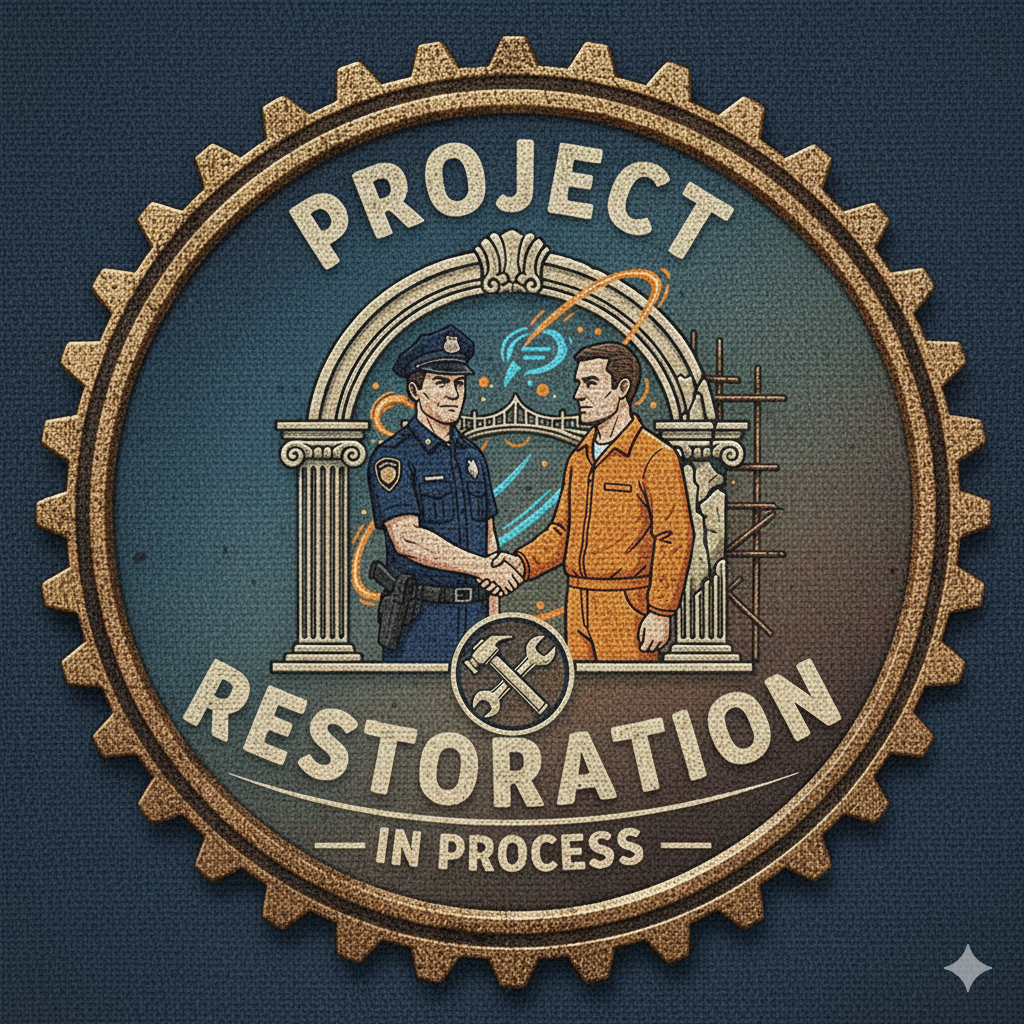
April 7th, 2026
Project Restoration in Progress has officially begun!
We’re on a mission to restore hope, rebuild lives, and walk alongside those ready for a fresh start.
Follow along as we share stories, impact, and opportunities to get involved.
Restoration isn’t an event — it’s a journey. And it starts here.